

The Hidden Complexity of Airport Construction Scheduling: Why Aviation Projects Demand a Different Approach
Updated: Aug 6
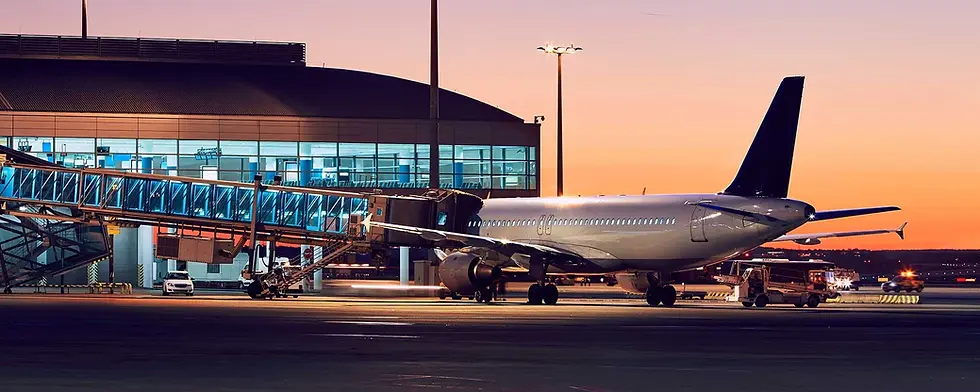
Every construction project has a schedule. Airport construction projects have thousands of them.
Unlike traditional commercial construction, aviation projects take place in one of the world's most complex operating environments. Every activity must be coordinated around aircraft operations, passenger safety, airline schedules, security requirements, regulatory compliance, and dozens of independent stakeholders. A single scheduling oversight can delay flights, disrupt airport operations, increase project costs, and affect thousands of travelers.
For these reasons, airport construction scheduling is not simply about creating a CPM schedule—it's about managing risk while keeping an airport running safely and efficiently.
Project Scheduling for Airport Construction That Never Stops Operating
The greatest challenge of aviation construction is that the facility rarely closes. Major airports operate 24 hours a day, 365 days a year, and construction must occur without interrupting daily operations.
This means schedulers must coordinate work around:
Aircraft arrivals and departures
Passenger traffic
TSA and security operations
Airline operational requirements
Emergency vehicle access
Ground transportation
Cargo operations
Utility systems serving active terminals
Airport maintenance activities
Unlike conventional construction sites, airport projects often require construction crews to work around the airport rather than the airport working around construction.
Limited Construction Windows
Many critical airside activities can only occur during carefully planned closures.
Examples include:
Runway and taxiway rehabilitation
Airfield lighting installation
Pavement reconstruction
Utility crossings beneath active taxiways
Navigation aid relocation
These activities frequently have work windows lasting only a few hours overnight. Every minute counts.
If a contractor misses the reopening deadline, the consequences may include:
Flight delays
Aircraft diversions
Airline operational disruptions
FAA coordination issues
Significant liquidated damages
The schedule must therefore be planned to the hour—not just the day.
Hundreds of Stakeholders, One Schedule
Airport projects involve far more participants than typical infrastructure projects.
A single capital project may require coordination among:
Airport Owner
Program Management Office (PMO)
Airlines
FAA
TSA
Customs and Border Protection
Airport Operations
Air Traffic Control
Designers
Contractors
Utility Companies
Local Authorities
Security Personnel
Concessionaires
IT and Communications Teams
Each stakeholder has operational priorities that influence the construction schedule.
A successful scheduler becomes the central point of coordination between technical construction activities and airport operations.
Security Requirements Add Another Layer of Complexity
Construction inside secure airport environments requires extensive planning before work even begins.
Scheduling considerations often include:
Badging requirements
Security escorts
Material inspections
Vehicle access restrictions
Secure area deliveries
Temporary fencing
Access route approvals
Simple activities that take minutes on a conventional construction site may require days of coordination in an active airport.
Utility Shutdowns Require Precision
Airports depend on continuous operation of critical systems including:
Power distribution
Communications
Fuel systems
Baggage handling
Passenger boarding bridges
Fire protection
Security systems
HVAC
Water and sewer services
Many of these systems cannot simply be turned off.
Utility shutdowns often require:
Detailed outage plans
Multiple stakeholder approvals
Airline coordination
Backup system testing
Emergency response planning
Overnight execution windows
Even a short outage can impact terminal operations if not carefully planned.
Project Scheduling for Hundreds of Stakeholders and Contractors
Airport capital improvement programs frequently consist of dozens—or even hundreds—of concurrent projects.
Examples include:
Terminal renovations
Gate expansions
Airfield improvements
Parking structures
Roadway reconstruction
Utility upgrades
Technology modernization
Each contractor has its own schedule, yet all projects share common resources, work areas, and operational constraints.
Project schedulers must continuously identify conflicts before they become field issues.
Supply Chain and Long-Lead Equipment
Airport projects rely on specialized systems that often have long procurement timelines, including:
Passenger boarding bridges
Baggage handling equipment
Security screening systems
Airfield lighting
Electrical switchgear
Elevators and escalators
HVAC equipment
A delay in one critical component can affect multiple construction phases across the program.
Effective scheduling integrates procurement milestones with construction activities to minimize downstream impacts.
Regulatory and Operational Compliance
Airport projects operate under strict regulatory oversight.
Schedules must account for:
FAA approvals
Environmental permits
Safety inspections
Quality assurance reviews
Commissioning activities
Operational readiness testing
Airline acceptance procedures
Many milestones cannot begin until multiple agencies provide approval, making dependency management especially critical.
Schedule Updates Are More Than Progress Reports
On aviation projects, monthly schedule updates are not simply administrative requirements.
They provide early warning for:
Critical path shifts
Float erosion
Resource conflicts
Procurement delays
Airfield access issues
Operational risks
Recovery opportunities
Executive leadership depends on accurate schedule reporting to make informed decisions before small issues become major disruptions.
Technology Is Changing Airport Scheduling
Modern aviation programs increasingly leverage digital tools to improve project controls, including:
Primavera P6 Critical Path Method (CPM)
4D schedule simulations
Interactive Power BI dashboards
GIS integration
Digital project controls platforms
AI-assisted schedule analysis
Automated reporting
These technologies improve visibility, support faster decision-making, and help teams proactively identify schedule risks across complex capital programs.
The Value of Independent Schedule Review
Many airport owners now engage independent scheduling consultants to review contractor schedules throughout the project lifecycle.
Independent schedule oversight helps:
Validate baseline schedules
Verify logic and sequencing
Identify unrealistic durations
Evaluate recovery plans
Assess delay impacts
Review change-order time extensions
Provide objective executive reporting
This independent perspective strengthens decision-making and helps maintain schedule integrity across the program.
Final Thoughts
Airport construction is among the most demanding sectors in the construction industry. Success depends not only on engineering excellence but also on precise planning, continuous coordination, and disciplined schedule management.
An effective airport scheduler must balance operational continuity, regulatory compliance, stakeholder coordination, and construction progress—often within narrow work windows and under constant operational pressure.
As airports continue to invest billions of dollars in modernization and expansion, sophisticated project scheduling and controls will remain essential to delivering projects safely, efficiently, and with minimal disruption to passengers and airport operations.
Whether supporting terminal expansions, runway rehabilitation, airfield improvements, or large-scale capital improvement programs, proactive scheduling is one of the most valuable tools available to keep airport projects moving forward while the airport itself never stops.


Comments